iPhone Fold Design Leaks Online Revealing Apple's Bold Foldable Strategy

1AM Gamer Team
31 December 2025 02:30 AM GMTApple's foldable iPhone just got exposed in a major way.
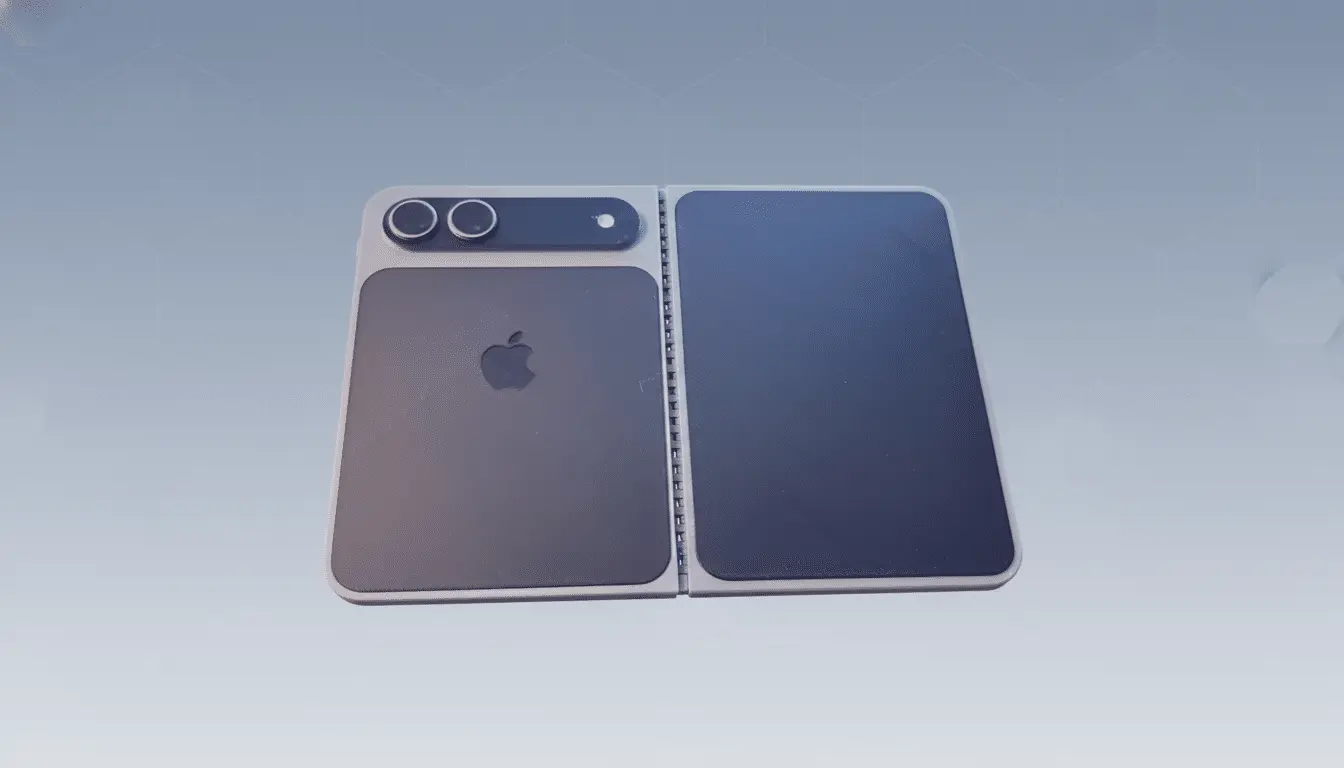
YouTuber Jon Prosser dropped detailed renders on Christmas Eve. This came months after Apple sued him. The timing? Deliberate. The renders show a book-style foldable that looks wider than tall when folded. Think first-generation Pixel Fold proportions. When closed, the device measures 9mm thick. Opening it reveals a 7.8-inch display at just 4.5mm per half.
That's thinner than the iPhone Air. Much thinner.
The Crease Problem Apple Claims to Solve
Every foldable shares one flaw. The crease never fully disappears. Samsung reduced theirs. Google refined theirs. Nobody eliminated it.
Prosser claims Apple did what others couldn't. According to his sources, the internal display shows no visible crease. The renders attribute this to a metal plate beneath the screen that disperses bending pressure. Liquid metal within the hinges supposedly completes the solution.
Physics says OLED panels deform under repeated folding. The renders show a flawless screen. Production hardware will prove whether Apple's engineering matches the marketing.
Chinese leaker Digital Chat Station shared different details on Weibo weeks earlier. His track record includes accurate iPhone 12, 15, and 17 Pro predictions. The leaker describes a "wide foldable" device prioritising thinness through major design decisions. The hinge design gets described as "very strong" without specific technical specs.
Face ID Gets Axed
Here's where things get interesting.
Apple chose not to include 3D Face ID hardware or a 3D ultrasonic under-display fingerprint sensor. Both systems add internal volume. Both complicate thinness goals. Touch ID returns via a side-mounted sensor in the power button.
This isn't nostalgia. This is Apple choosing reliability over facial scanning on a folding frame. Different orientations, multiple configurations, tight internal space, Face ID becomes complicated when your phone transforms shapes.
Display sizes tell another story. The external screen measures between 5.25 and 5.5 inches depending on which leak you trust. That's smaller than the discontinued iPhone 13 mini's 5.4-inch panel. The internal display spans 7.8 inches when unfolded. Nearly iPad mini territory.
The outer display uses a 5.25-inch panel with a punch-hole camera via HIAA (Hole-In-Active-Area) design. This technique minimises inactive screen space around the cutout. The inner display reportedly features an under-panel camera. Samsung tried this approach in the Z Fold 3, 4, and 5 before ditching it for Z Fold 6. Their UPC resolution topped out at 4 megapixels. Selfies looked rubbish.
Camera Compromises Emerge
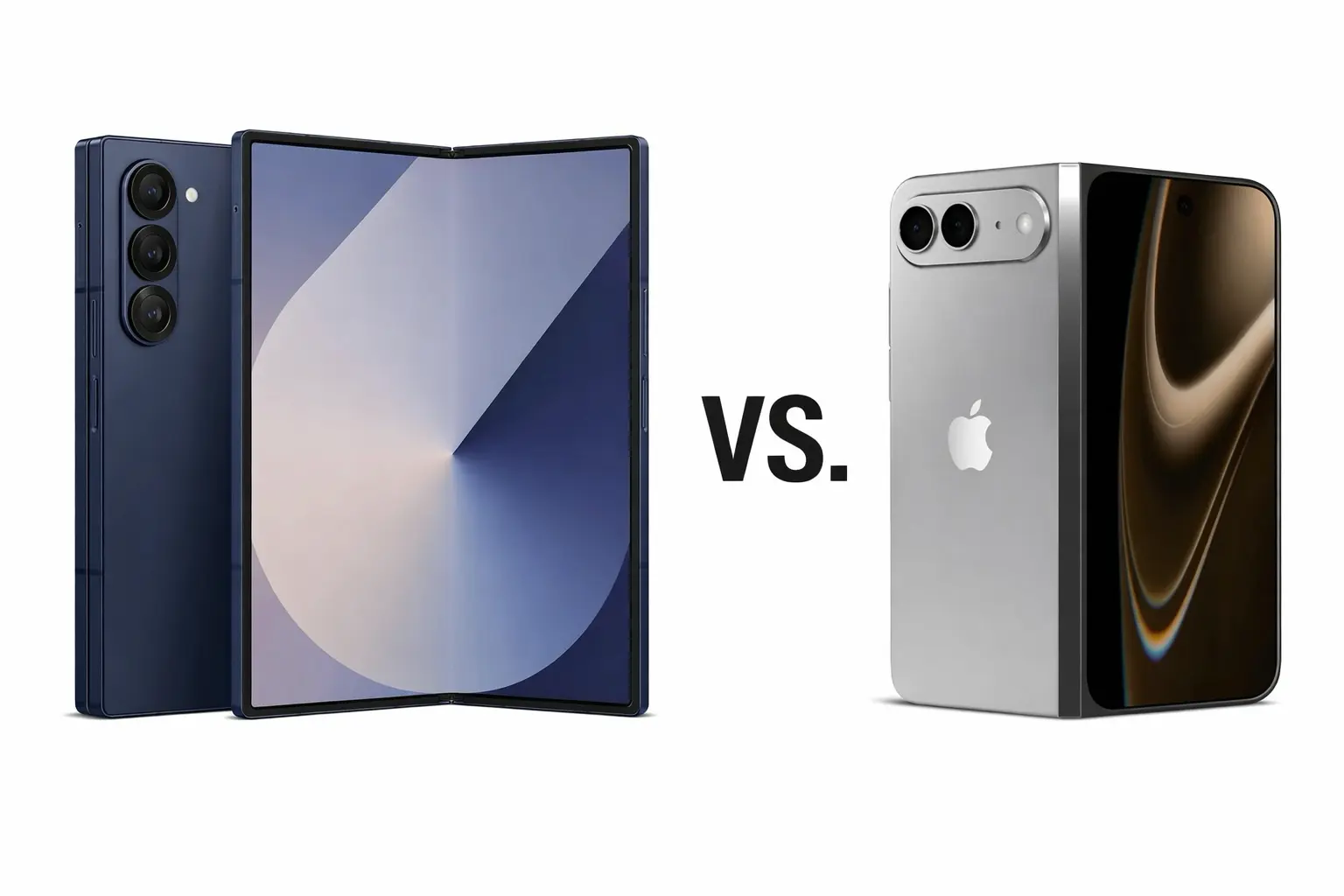
The rear camera setup disappoints on paper. Digital Chat Station claims the device features a dual 48-megapixel rear camera system described as having a "large base". No telephoto. Most premium foldables pack three rear cameras. Google's Pixel 10 Pro Fold has three. Samsung's Galaxy Z Fold 7 has three.
Apple's going with two. Main camera plus ultrawide. That's the rumour. Photographers won't love this choice.
Prosser's renders match this spec. Two cameras sit on an elongated shelf. The LED flash positions opposite. The layout mirrors recent minimalist iPhone camera designs. Four total cameras grace the device, one external, one internal, two rear-facing.
The Crease-Free Tech Deep Dive
Apple is testing next-generation ultra-thin flexible glass (UFG) with uneven thickness. The folding area uses thinner glass for flexibility. Other sections stay thicker for rigidity and durability. Unlike ultra-thin glass (UTG) in existing foldables, UFG distributes bending stress more evenly.
Theory suggests the crease becomes visually imperceptible during everyday use. Testing continues. Manufacturing processes get refined. Long-term reliability targets need hitting before the expected 2026 launch alongside iPhone 18.
Chinese manufacturers evaluate UFG technology too. They're testing similar wide-fold solutions. If supply chain tech gets successfully developed, competing products arrive next year.
Lawsuit Context Adds Drama
Apple sued Prosser in July 2025. The charges? Allegedly stealing trade secrets related to iOS 26 and Liquid Glass design language. The lawsuit claims Prosser and Michael Ramacciotti devised a plan. They wanted non-public information. They got it.
Prosser's response? "Screw it."
He doubled down. August brought iPhone 17 Pro renders one month before Apple's official unveiling. Christmas Eve delivered the foldable iPhone leak. Each release escalates Apple's legal conflict. Each release sharpens Prosser's credibility. Attention follows.
Pricing and Availability
Prosser claims the foldable iPhone costs between $2,000 and $2,500. That's £1,600 to £2,000 in British money. Apple's most expensive smartphone ever. Colour options stay limited, black and white only. Control over customisation matters more than variety.
The device reportedly uses Apple's second-generation C2 modem. High-density batteries support the thin design. A slimmer display driver frees internal space. Battery capacity could reach 5,400-5,800mAh according to analyst Ming-Chi Kuo. That's massive for an iPhone.
Launch timing points to fall 2026 alongside iPhone 18 Pro and iPhone 18 Pro Max. Mass production planned for second half 2026. Some reports suggest stockpiling components already started. Bloomberg's Mark Gurman expects a fall 2026 release. Japan's Mizuho Securities warns postponement to 2027 remains possible. Design elements like the hinge still need final decisions.
Samsung Competition Heats Up
Samsung isn't waiting around. Reports from late December 2025 say they're accelerating development of a "Wide Fold" variant. The device features a 7.6-inch OLED display when unfolded using a near-4:3 aspect ratio. Sound familiar?
Apple's foldable looks heavily inspired by the Google Pixel Fold according to recent CAD renders and supply chain reports. A near-4:3 inner display aligns perfectly with iPad app layouts. When unfolded, the experience feels closer to a compact iPad mini than a blown-up phone. Apps designed for iPadOS should translate naturally. Reading, split-screen multitasking, content creation, all benefit.
The Commercial Reality Check
Success remains uncertain. Foldables stay niche devices. Durability concerns persist. Price limits adoption.
The iPhone Air impressed critics. Sales flopped. Consumers favoured battery life and cameras over thinness. A foldable iPhone will draw attention. Headlines will dominate. Sales deliver the final verdict.
Apple learned that engineering brilliance doesn't guarantee commercial success. The iPhone Air proves consumers think differently than reviewers. They want functionality over form. They need longevity over novelty.
Will buyers see value in a £2,000 foldable? Especially one missing Face ID? Especially one with only two rear cameras? These questions matter more than leak drama.
Until then, Apple faces a familiar problem. Its future continues to leak before introducing itself.
Related Articles

EA Slams Sims 4 Leaks as "Misinformation" Before January 2026 Reveal
EA community manager shuts down royalty expansion rumours and confirms official Sims franchise news drops early 2026 after leaked claims about final content.
1AM Gamer Team
29 December 2025
Rockstar Confirms GTA 6 Leaks Were Real Through Court Battle with Sacked Devs
Court documents reveal Rockstar inadvertently confirmed GTA 6 details whilst fighting 34 fired developers accused of leaking top-secret information.
1AM Gamer Team
14 January 2026
Fortnite Returns to iOS App Store Worldwide as Epic Declares "Final Battle" Against Apple
Fortnite is back on Apple's App Store in nearly every country after six years off iOS. Epic Games says this marks the final battle in its legal war with Apple.
1AM Gamer Team
21 May 2026