
Gaming Stocks Crash After Google Genie Launch Shows Investors Don't Understand AI

1AM Gamer Team
1 February 2026 21:00 PM GMTGoogle's announcement of Project Genie sent gaming stocks into freefall on Friday. Unity plummeted 24%, its worst single-day drop since 2022. Take-Two Interactive shed nearly 8%. Roblox lost 13% of its value.
The panic? Investors thought Google had cracked the code on automated game development.
They were wrong.
What Project Genie Actually Does
Project Genie lets you type a prompt and explore a basic virtual environment. Want to see what it's like to control a cat riding a Roomba through a living room? You're sorted for exactly 60 seconds.
The tool builds on Google DeepMind's Genie 3, which the company unveiled last August. Google calls it a "world model" because it generates environments frame by frame as you move through them. Type "volcanic terrain with a wheeled robot", and the system creates a navigable space in real time.
But here's where the investor confusion kicks in: Genie isn't a game engine. A Google spokesperson told The Register the tool "is not a game engine and can't create a full game experience". It's a research prototype for rapid prototyping and idea generation, nothing more.
The experience caps out at 60 seconds per generation. Frame rates hover around 20-24 fps. Resolution maxes at 720p. Character controls lag. Physics bend in weird ways. Generated worlds drift from your original prompt. Multiple characters struggle to interact properly.
Oh, and you need a $250-per-month Google AI Ultra subscription to access it.
The Market Freakout Nobody Asked For
Within hours of Google's announcement, billions evaporated from gaming company valuations. Nintendo dropped 5%. CD Projekt Red fell 8.7%. AppLovin crashed 17%. Tencent slid 2.5%.
Why did investors panic?
Two competing theories emerged. Some believed Genie signals the democratisation of game creation, anyone will soon make their own AAA title, rendering established studios obsolete. Others worried developers would adopt tools like Genie, slashing development costs and threatening the premium valuations of companies like Unity.
Wells Fargo analysts called the reaction overblown. Their memo noted consumers might generate virtual worlds to explore, but there still needs to be a platform for online engagement. Higher quality experiences will always find a market.
Take-Two CEO Strauss Zelnick put it bluntly: no one will prompt an AI with "Please develop the competitor to Grand Theft Auto that's better than Grand Theft Auto" and get something remotely playable. Humans remain essential for compelling art. AI might assist, but it won't replace human creativity entirely.
Unity's CEO Tries Damage Control
Unity CEO Matthew Bromberg took to X to calm nervous shareholders. World models technology isn't fully developed yet, he explained, though it's part of Unity's long-term strategy. These tools serve as creative accelerators, not replacements for game engines.
The reassurance didn't stop the bloodbath. Unity's 24% drop wiped out billions in market capitalisation.
Industry veterans echoed Bromberg's caution. Epic Games CEO Tim Sweeney acknowledged the technical achievement whilst raising questions about how AI-generated content would integrate with existing development pipelines. Rendering architect Sebastian Aaltonen noted significant doubts remain about the depth and long-term playability of AI-generated worlds compared to human-designed experiences.
What Genie Can and Cannot Do
Current limitations paint a sobering picture. The tool struggles with:
- Rendering legible text
- Simulating real-world physics accurately
- Maintaining consistency beyond a minute
- Providing responsive character controls
- Supporting multiple interactive agents in the same space
Some capabilities Google previewed in August, like promptable events that dynamically change the world during exploration, haven't made it into the public prototype.
Genie 3 excels at specific tasks: creating diverse camera perspectives, modelling water and smoke effects, animating characters, simulating basic object interactions. Users have already created knockoff Mario worlds, raising obvious copyright concerns.
But treating these tech demos as existential threats to the $188 billion gaming industry? That's a stretch.
The Industry Strikes Back
A recent Game Developers Conference survey revealed 52% of game developers think AI negatively impacts the industry. That's up from 30% last year and 18% the year before.
Professionals in visual art, technical art, game design, narrative, and programming hold the most unfavourable views. One machine learning ops employee quoted in the GDC study admitted their team intentionally works on a platform "that will put all game devs out of work and allow kids to prompt and direct their own content".
Yet the gaming industry has weathered technological disruptions before. When Unity and Unreal Engine democratised development tools in the 2000s, observers predicted they'd eliminate competitive advantages for established studios. The industry adapted instead.
AAA development costs have ballooned to over $200 million, with timelines stretching beyond five years. If AI tools genuinely accelerate production whilst maintaining quality, that could benefit the sector overall. The companies that thrive will treat AI as an accelerator, not a replacement for human creativity.
What This Means Going Forward
Freedom Capital Markets called the selloff premature. Worries about AI replacing game developers are overblown, at least for now. The technology simply isn't mature enough to threaten traditional development workflows.
Project Genie represents Google's latest attempt to apply its AI infrastructure to new domains. The company positions it as part of its AGI mission, building systems that can navigate diverse real-world environments. Whether it evolves into a commercial product remains unclear.
For investors, the challenge lies in distinguishing between short-term volatility and fundamental shifts in competitive dynamics. The gaming industry has repeatedly demonstrated resilience when faced with technological change.
The market reaction to Project Genie says more about investor anxiety around AI than the actual threat to established game developers. Google's tool might spark interesting creative workflows. It won't replace Grand Theft Auto VI anytime soon.
Access to Project Genie is rolling out exclusively to Google AI Ultra subscribers in the US aged 18 and above. Google plans to expand availability to other regions but hasn't announced a timeline.
The technology offers a glimpse into where interactive media might head. Just don't expect it to put Unity or Epic Games out of business this decade.
Related Articles
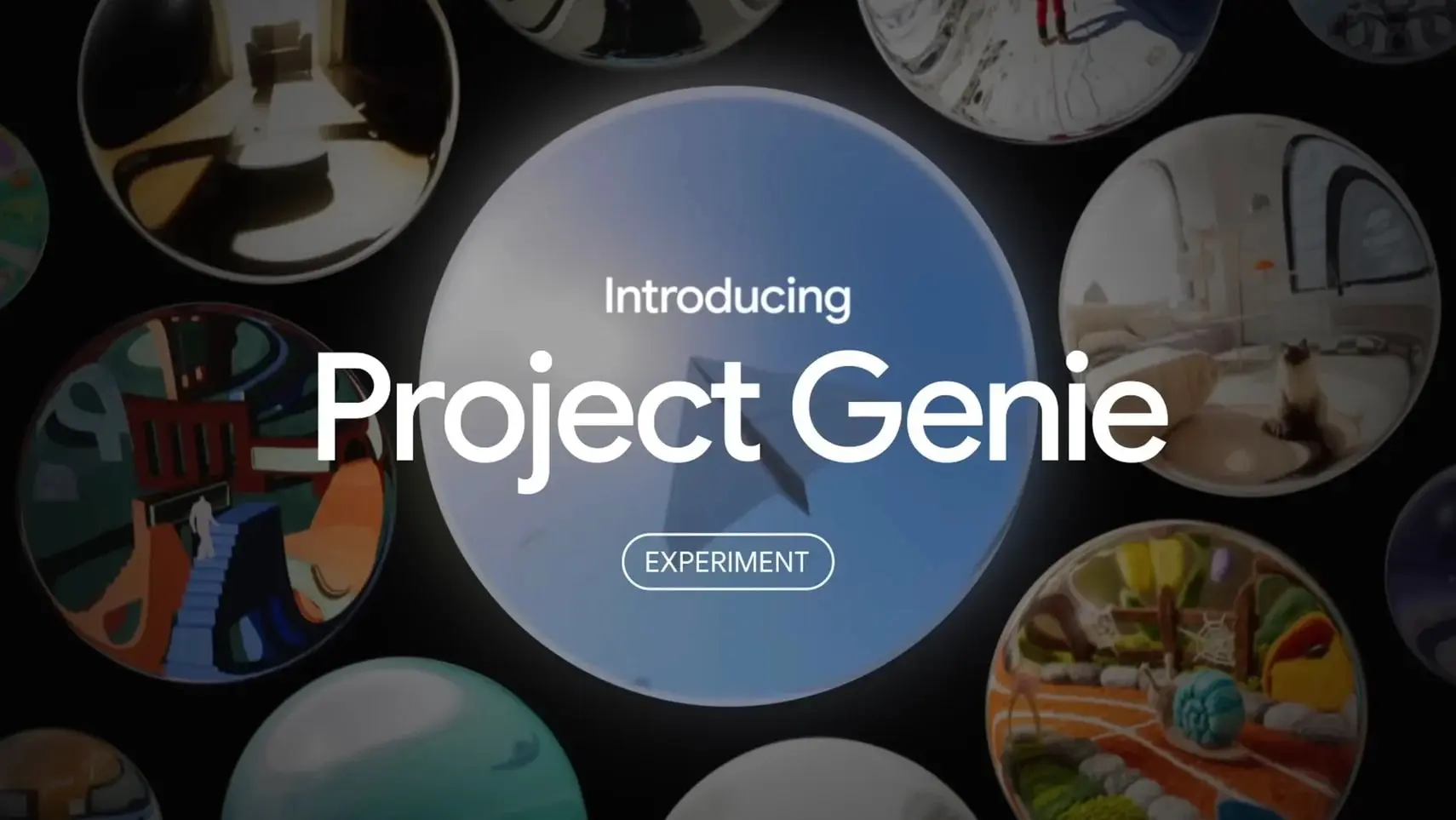
Google's Project Genie Spits Out Nintendo Knockoffs, Raising Copyright Alarm
Google's new AI world generator creates playable environments from prompts, including Mario, Zelda, and Metroid lookalikes. But the tech launched with zero copyright safeguards.
1AM Gamer Team
30 January 2026
Former Ubisoft Osaka Designer Debunks DEI Conspiracy Theories Behind Company Crisis
Ex-Ubisoft designer Kensuke Shimoda challenges misinformation linking diversity initiatives to stock decline, pointing to management failures instead.
1AM Gamer Team
27 January 2026
GTA 6 Marketing Campaign Confirmed to Begin This Summer Ahead of November Release
Take-Two Interactive confirms Rockstar will begin its GTA 6 marketing campaign this summer, expressing unprecedented confidence in the November 19 release date.
1AM Gamer Team
4 February 2026